
Core Beliefs
Core beliefs are fundamental, deeply held beliefs about oneself, others and the world. Core beliefs act like internal "filters" or "lenses," shaping how we perceive and interpret experiences. Core beliefs often stem from childhood and significant life events. Core beliefs can be helpful, unhelpful or negative and can cause distress and contribute to psychological struggles, low self-esteem and negative thought patterns. However, they can be challenged and changed with awareness through therapy.

Types of core beliefs
Types of core beliefs can be divided into about self, about others and about the world.
Negative core beliefs
About Self: “I am a failure”, “I am worthless”
About Others: “People will hurt me”, “People are selfish”
About the World: “Life is a struggle”, “The world is unfair”
Positive Core Beliefs - to be developed
About Self: “I am capable”, “I am valuable”
About Others: “I can trust others”, “People are generally good”
About the World: “Life is full of opportunities”, “The world is a safe place”
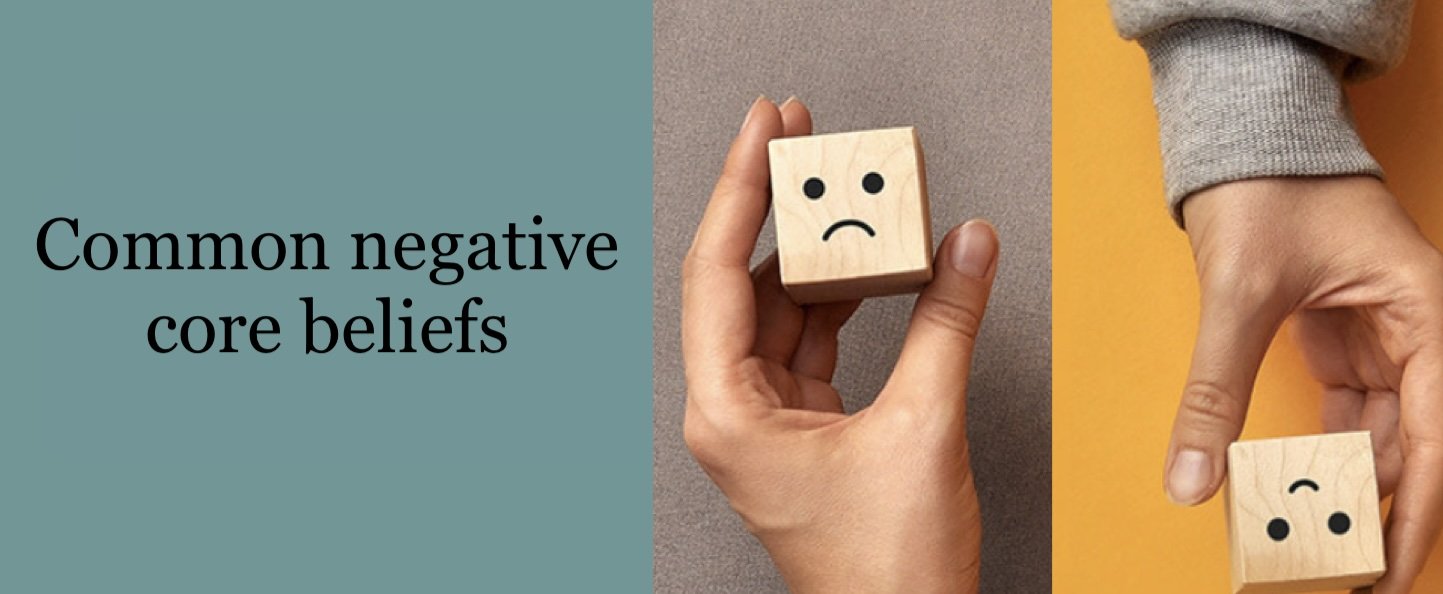
Common Negative Core Beliefs
Some common negative core beliefs:-
Unlovability - “I am not lovable”
Inadequacy - “I am not good enough”
Helplessness - “I am powerless”
Unworthiness - “I don’t deserve good things”
Defectiveness - “There is something wrong with me”
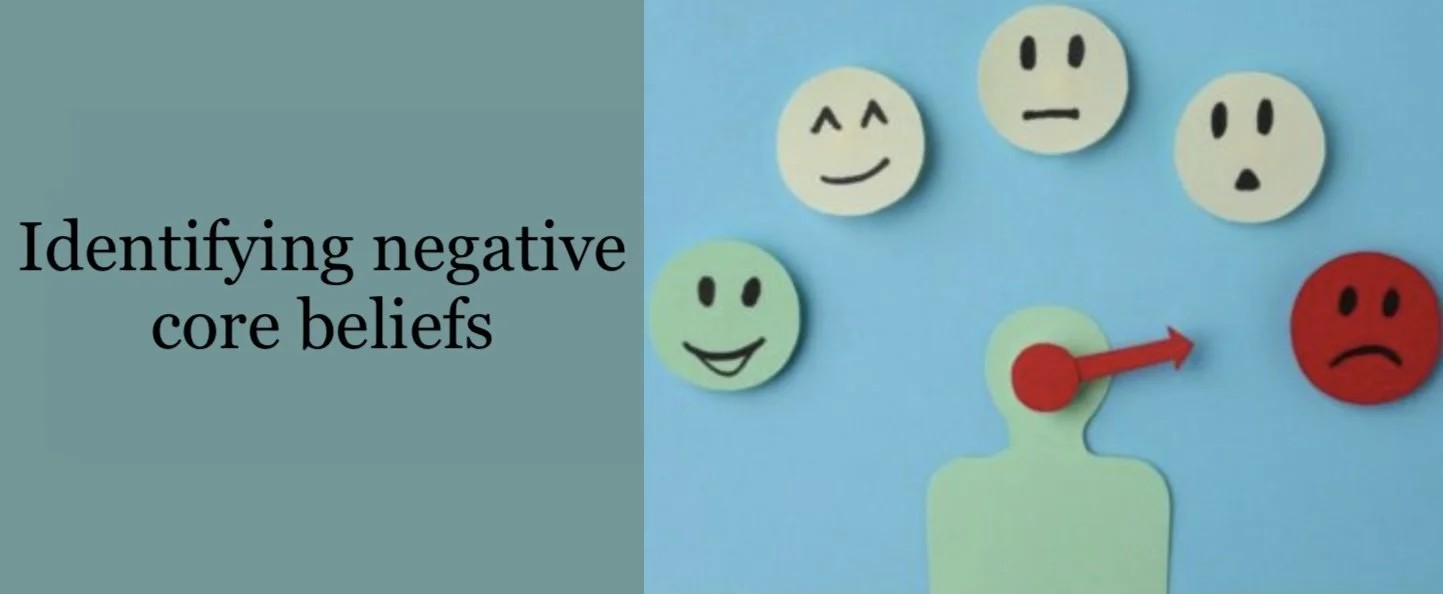
Identifying negative core beliefs
Triggers: Events or situations that activate negative core beliefs such as failure, rejection, criticism
Automatic Thoughts: Immediate thoughts that arise in response to triggers such as “Nobody likes me’, “I can’t do anything right”
Emotional Responses: Following on from automatic thoughts feelings such as anxiety, sadness, anger
Behavioural Responses: In response to emotions actions or inactions such as avoidance, withdrawal, procrastination
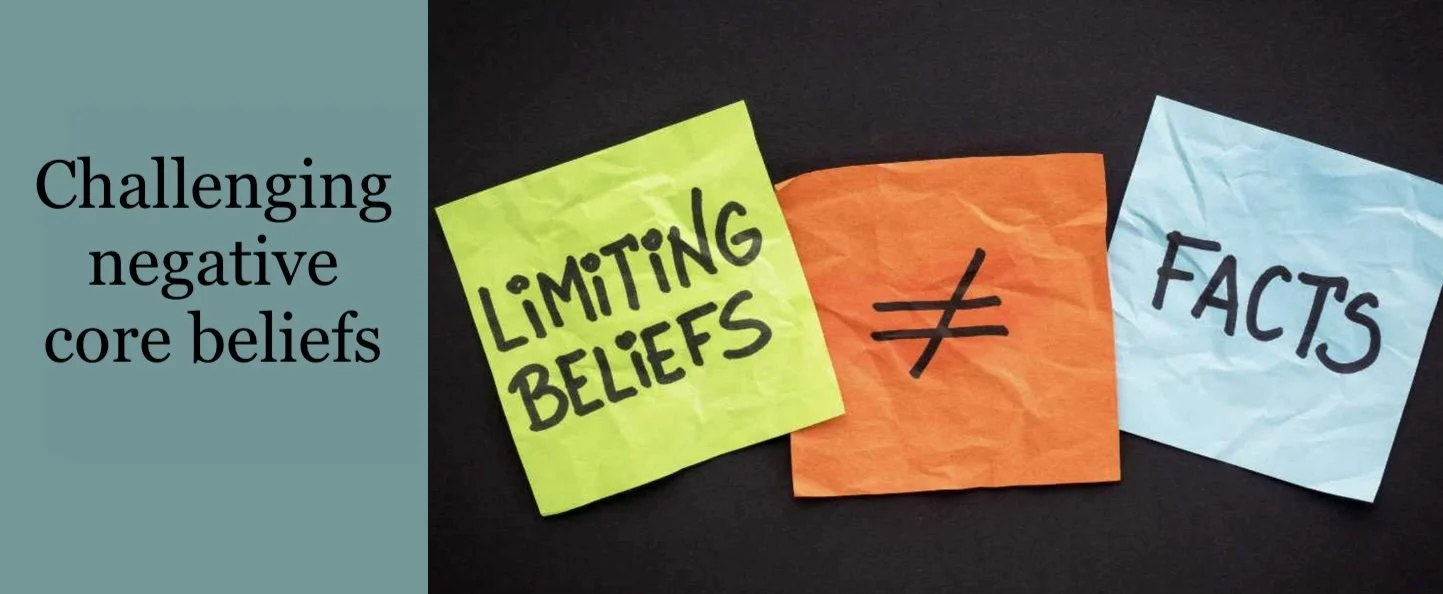
Challenging negative core beliefs
Cognitive Restructuring
Evidence Examination - evaluate the evidence for and against the belief
Alternative Interpretations - consider other possible explanations
Socratic Questioning - ask questions to challenge the belief - such as “What evidence do I have that contradicts this belief?”, “Is this always true?”
Behavioural Experiments
Testing Beliefs - take part in activities that challenge the belief
Outcome Reflection - think about the results and what they say about the belief
Thought Records - keep a journal of thoughts, emotions, situations and alternative thoughts

Developing positive core beliefs
Affirmations - to counteract negative beliefs create and use positive statements such as “I am capable and strong”. “I am worthy of love”
Evidence Collection - actively seek and record evidence that supports positive beliefs such as compliments, positive feedback, achievements., etc.
Visualisation - visualise yourself embodying positive beliefs and succeeding in various situations
Gratitude Practice - regularly reflect on and write down things you are grateful for
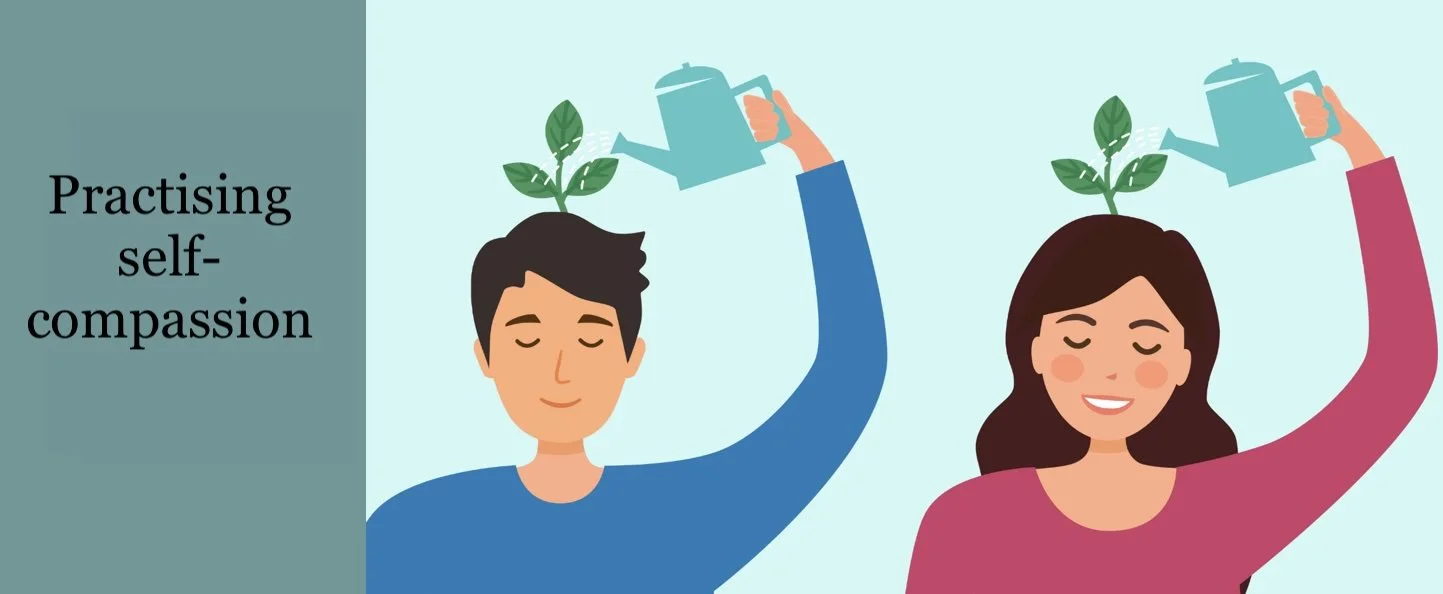
Practising self-compassion
Here are some suggestions to help with empowering yourself to have positive self beliefs
Self-kindness - treat yourself with the same kindness and understanding that you would a friend
Mindfulness - observe your thoughts and feelings without judgement. Use techniques such as deep breathing, body scans and meditation.
Common humanity - recognise that everyone makes mistakes and faces challenges